October 6, 2026
When property owners and facility managers realize they need structural modifications inside an existing building, panic often sets in. The mere thought of indoor concrete cutting brings up images of massive dust clouds, water-damaged floors, ruined inventory, and major disruptions to daily operations. Whether you are managing a sterile hospital environment, an active manufacturing plant, a busy retail space, or a populated corporate office, maintaining a clean and safe environment is your top priority.
We completely understand these concerns. We know that leaving a mess behind is simply not an option for our commercial clients. That is why we have engineered our processes to eliminate the mess before it ever has a chance to spread. In this comprehensive guide, we will pull back the curtain on our operational protocols to show you exactly how we protect your property, your people, and your peace of mind from dust and water damage during every indoor project.
Understanding the Risks of Indoor Modifications
Modifying the structural layout of an existing building is a complex and demanding undertaking. When a project requires trenching for new underground plumbing, creating openings for modernized HVAC ductwork, or removing sections of a slab for structural upgrades, specialized equipment must be used to break through the tough materials. Unregulated concrete cutting can release millions of microscopic particles into the air, while poorly managed cooling water can flood floors, seep into electrical trenches, or cause severe water damage to adjacent rooms.
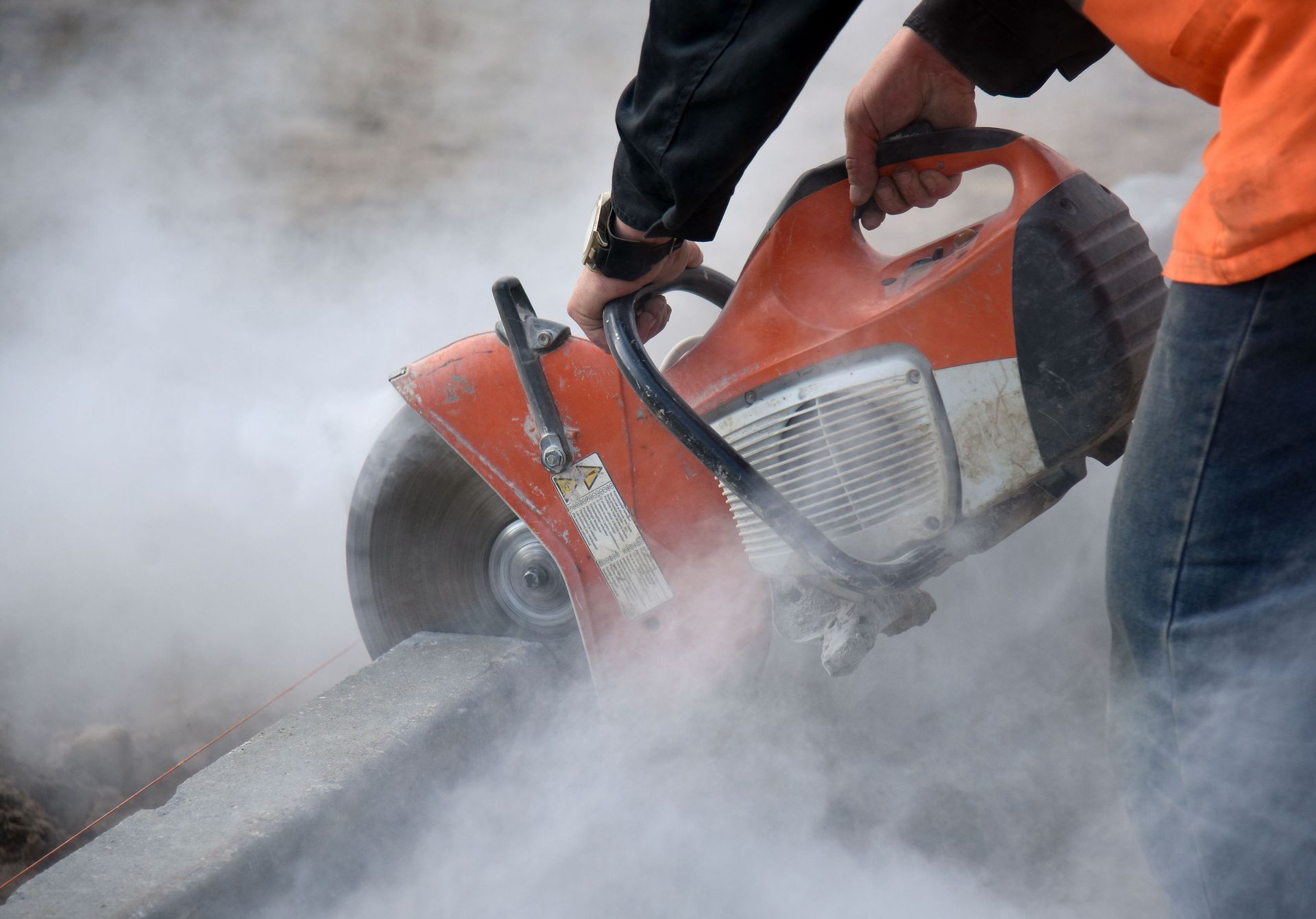
The primary hazard we face in these enclosed environments is respirable crystalline silica. Silica is a natural mineral found in concrete, brick, and block. When these materials are pulverized by a diamond blade, the resulting dust is smaller than a single grain of sand. If allowed to become airborne, this ultra-fine particulate matter settles on every available surface. It infiltrates computer servers, ruins exposed retail inventory, damages sensitive manufacturing machinery, and creates a massive, expensive cleaning liability for property managers.
Beyond property damage, the health risks to occupants and workers are severe. Breathing in silica dust can lead to serious respiratory conditions, including silicosis. Therefore, controlling this dust at the source is not just an aesthetic preference; it is a strict, vital requirement for any professional operation.
Controlling Airborne Dust With Water Suppression
The absolute most effective method for preventing silica dust from becoming airborne is to stop it at the very point of friction. To achieve this, our expert technicians employ advanced water suppression techniques. Water suppression is the gold standard for safe concrete cutting indoors. Instead of allowing the saw blade to grind dryly against the slab — which generates extreme heat and massive, dangerous plumes of dust — our specialized equipment features integrated water delivery systems.
As the diamond blade spins at high speeds, a continuous, carefully controlled stream of water is applied directly to the cut zone. This water serves some critical purposes. First, it cools the blade, preventing metal warping and ensuring a highly precise, clean cut. Second, and most importantly for the safety of your property, the water immediately binds with the dust particles the very millisecond they are generated.
Instead of pluming into the air, the dust is instantly transformed into a heavy, wet slurry that drops harmlessly to the floor. The safety benefits of this method are undeniably proven. According to McCraren Compliance, wet cutting concrete is crucial for safety, as dry cutting generates silica dust levels over five times the permissible exposure limit. By relying on state-of-the-art wet cutting technology, we guarantee that the air in your facility remains clean, breathable, and entirely free of hazardous silica clouds.
Containing Wet Slurry to Prevent Property Damage
While water suppression brilliantly solves the problem of airborne dust, it inevitably introduces a new logistical challenge: what happens to all that water? We deeply understand that the wet byproducts of concrete cutting can be just as damaging as the dust if left unmanaged. If slurry is allowed to run freely, it can seep under drywall, ruin expensive carpeting in adjacent rooms, warp finished hardwood floors, and pose a severe slip-and-fall hazard to anyone walking near the active work zone.
Our water management protocols are just as rigorous as our dust suppression methods. We do not just spray water and hope for the best; we actively contain and extract it in real-time. Before the blade ever touches the floor, our team sets up strict physical containment barriers. We utilize specialized slurry rings, waterproof berms, and heavy-duty protective plastic sheeting to create a watertight perimeter around the work area.
During the cutting operation, a dedicated technician operates an industrial-grade wet vacuum system alongside the primary saw operator. The moment the water binds with the dust to create slurry, it is immediately vacuumed and extracted from the surface. This simultaneous cutting and extraction process ensures that water never has the opportunity to pool, spread, or seep across your facility. Once extracted, the slurry is collected in securely sealed containers and properly disposed of off-site according to environmental regulations, ensuring that no heavy materials ever enter or clog your building’s internal plumbing system.
Safeguarding HVAC Systems and Indoor Air Quality
Even with the absolute best water suppression and slurry containment systems currently available, a professional operation must account for the unexpected. A major concern during any indoor concrete cutting project is the building's central ventilation system. If even a minuscule amount of dust manages to escape the immediate work zone, an active HVAC system can rapidly pull those particles into the return vents and distribute them throughout the entire building, contaminating areas located far away from the actual construction site.
To systematically prevent this, our crews implement strict isolation protocols before the saw is ever turned on. We meticulously seal off all HVAC return and supply registers within the vicinity of the work zone using heavy-duty plastic film and specialized, non-damaging tape.
Furthermore, for highly sensitive environments like hospitals or occupied offices, we frequently utilize negative air machines equipped with high-efficiency particulate air (HEPA) filters. These commercial scrubbers continuously pull air from the work zone, filter out any microscopic impurities, and exhaust completely clean air out of the space. By creating a negative pressure environment, we ensure that the airflow naturally moves into the work zone rather than out of it. This multi-layered approach to indoor air quality means that your employees, customers, or tenants in adjacent rooms will likely never even know that heavy construction is taking place nearby.
Ensuring Full Compliance With Safety Regulations
When you hire contractors to perform major structural modifications on your property, you are inherently taking on a level of shared liability. If a contractor flagrantly violates Occupational Safety and Health Administration (OSHA) standards, it can result in immediate project shutdowns, severe financial fines, and lasting legal complications for the property owner. Choosing a true professional for your concrete cutting needs means bringing on a dedicated partner who takes regulatory compliance just as seriously as you do.
OSHA’s respirable crystalline silica standard dictates exactly how airborne dust must be managed on job sites. By rigorously enforcing our water suppression and slurry containment methods, our team easily meets and exceeds these strict federal guidelines on every single job. We maintain comprehensive written exposure control plans, conduct regular, updated safety training for all our technicians, and equip our teams with top-of-the-line personal protective equipment (PPE).
We take on the full burden of safety compliance so that property managers and owners do not have to worry. When our fully equipped trucks pull up to your facility, you can rest easy knowing that the project is being handled by a team that prioritizes the health of its workers, the safety of your building occupants, and full adherence to all local and federal environmental regulations.
You deserve a contractor who delivers exact, professional results without the headache of collateral damage. Contact A Georgia Cutter, Inc today to discuss the details of your next indoor project, and let us show you how clean, safe, and entirely stress-free interior structural modifications can truly be.